Upcoming Events:
September 25 - Girl Scouts Parent Night
September 27 - Early Release at 1:45
Resources this week:
Cox:
Monday - Art
Wednesday - Music
Friday - Music
Townsend:
Wednesday - P.E.
Thursday - Music
Friday P.E.
ELA:
You will find ELA activities and information on Mrs. Townsend's class dojo this week.
Math:
This week in math we will continue
learning about the commutative property to solve word problems using
arrays. We will use the distributive
property as a strategy to find related multiplication facts. The students will apply
the distributive property to decompose units and will begin solving two-step word
problems involving multiplication and division and assess the reasonableness of
answers.
Example of solving word
problem using arrays and commutative property:
Ms.
Williams draws the array below to show the class seating chart. She sees the students in 6 rows of 7 when she
teaches at the front board. Use the
commutative property to show how Ms. Williams sees the class when she teaches
at the side board.
This array shows 6 rows
of 7

This array shows 7 rows of 6


Things
to practice at home:

This array shows 7 rows of 6
Example
of number bond to decompose units:

Examples of distributive
property used to decompose units:
Distributive Property of Multiplication

Using the distributive property with division:

Study for Mid-module test Tuesday
Practice multiplication facts 2-10
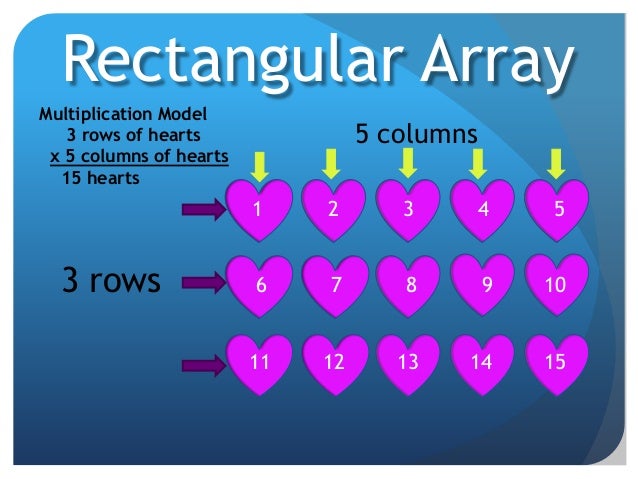
Use arrays to model multiplication (2 x 5 or 2 rows of 5, 4
x 4 or 4 rows of 4)
Continue practicing math facts using distributive property
to break apart large multiplication facts
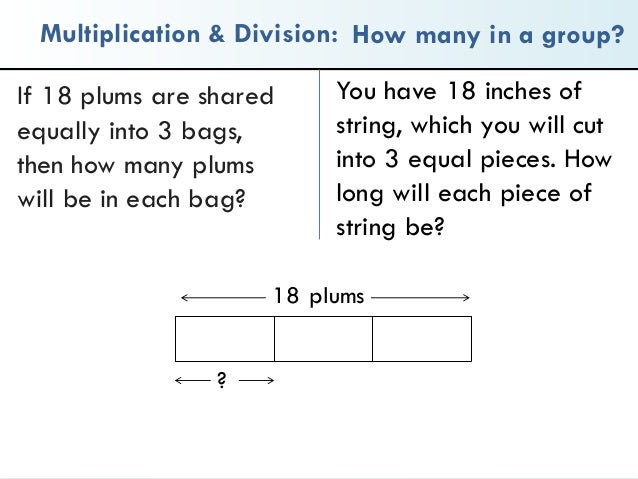
Write word problems and solve using tape diagrams or number bonds.
Science:
This week in Science, we will discuss ways to collect and
record data during investigations. We
will continue our discussion on how scientists use their observations to infer
and make explanations during their explorations.